Liebherr L 531 '1974
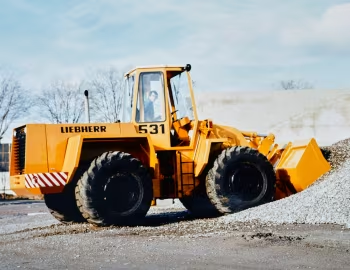
In 1974, two test machines of the L 531 type were produced at the Liebherr-France factory in Colmar. Under the designation L 531, Liebherr developed a completely new prototype of wheel loaders. The 11,000 kg L 531 wheel loader was slightly heavier and at 87 kW / 118 PS had more power than the LSL 1500 loader, the bucket volume of 2.0 m³ remained the same. Until then, all wheel loaders were equipped with a torque converter. However, the engineers at Liebherr asked themselves the question: "Is there any other, better and more suitable drive system?" They wanted to know exactly, so they built two test machines. One with a torque converter and the other with a novelty in the field of wheel loaders – with a hydrostatic drive. Both wheel loaders passed the same load tests. After extensive comparative tests of both prototypes, a ground-breaking decision was made about the future technology. The result was unequivocal, and thus the world's first wheel loader with hydrostatic drive was born.
Liebherr L 531 '1974Produced in 2 copies
In 1974, two test machines of the L 531 type were produced at the Liebherr-France factory in Colmar. Under the designation L 531, Liebherr developed a completely new prototype of wheel loaders. The 11,000 kg L 531 wheel loader was slightly heavier and at 87 kW / 118 PS had more power than the LSL 1500 loader, the bucket volume of 2.0 m³ remained the same. Until then, all wheel loaders were equipped with a torque converter. However, the engineers at Liebherr asked themselves the question: "Is there any other, better and more suitable drive system?" They wanted to know exactly, so they built two test machines. One with a torque converter and the other with a novelty in the field of wheel loaders – with a hydrostatic drive. Both wheel loaders passed the same load tests. After extensive comparative tests of both prototypes, a ground-breaking decision was made about the future technology. The result was unequivocal, and thus the world's first wheel loader with hydrostatic drive was born.
WheelsAge.org '2005–pr.